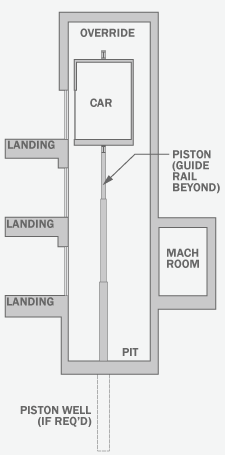
Hydraulic elevators are supported by a piston at the bottom of the elevator that pushes the elevator up as an electric motor forces oil or another hydraulic fluid into the piston. The elevator descends as a valve releases the fluid from the piston. They are used for low-rise applications of 2-8 stories and travel at a maximum speed of 200 feet per minute. The machine room for hydraulic elevators is located at the lowest level adjacent to the elevator shaft.
Conventional Hydraulic Elevators have a sheave that extends below the floor of the elevator pit, which accepts the retracting piston as the elevator descends. Some configurations have a telescoping piston that collapses and requires a shallower hole below the pit. Max travel distance is approximately 60 feet.
Hole-less Hydraulic Elevators have a piston on either side of the cab. In this configuration, the telescoping pistons are fixed at the base of the pit and do not require a sheave or hole below the pit. Telescoping pistons allow up to 50 feet of travel distance. Non-telescoping pistons only allow about 20 feet of travel distance
Roped Hydraulic Elevators use a combination of ropes and a piston to move the elevator. Maximum travel distance is about 60 feet.
Hydraulic elevators have a low initial cost and their ongoing maintenance costs are lower compared to the other elevator types. However, hydraulic elevators use more energy than other types of elevators because the electric motor works against gravity as it forces hydraulic fluid into the piston. A major drawback of hydraulic elevators is that the hydraulic fluid can sometimes leak, which can cause a serious environmental hazard. The environmental risk and high energy use are two main reasons that hydraulic elevators are not being installed as often as in the past.
Holded Hydraulic Elevator a direct-acting lift. The cabin is mounted on the piston that travels inside a cylinder. The hole is dug into ... As the elevator begins to drop, the pit supports a retracting piston. In some configurations, a conventional hydraulic elevator may require a shallower hole .. One of the key benefits of a traction elevator is its speed. Unlike hydraulic elevators, traction elevators can travel at faster speeds.
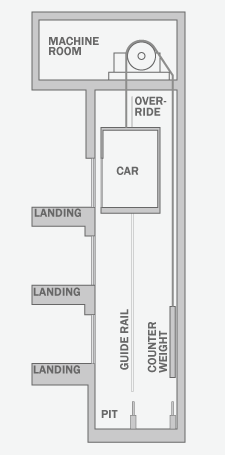
Traction elevators are lifted by ropes, which pass over a wheel attached to an electric motor above the elevator shaft. They are used for mid and high-rise applications and have much higher travel speeds than hydraulic elevators. A counter weight makes the elevators more efficient by offsetting the weight of the car and occupants so that the motor doesn't have to move as much weight.
Geared Traction Elevators have a gearbox that is attached to the motor, which drives the wheel that moves the ropes. Geared traction elevators are capable of travel speeds up to 500 feet per minute. The maximum travel distance for a geared traction elevator is around 250 feet.
Gear-less Traction Elevators have the wheel attached directly to the motor. Gear-less traction elevators are capable of speeds up to 2,000 feet per minute and they have a maximum travel distance of around 2,000 feet so they are the only choice for high-rise applications.
Geared traction elevators are middle of the road in terms of initial cost, ongoing maintenance costs, and energy consumption. Gear-less traction elevators have a high initial cost, medium ongoing maintenance costs, and use energy a bit more efficiently than geared traction elevators.
It is important that traction elevator ropes and sheaves are checked for wear on a regular basis. As they wear, the traction between the sheave and the cables is reduced and slippage becomes more regular, which reduces the efficiency and can become dangerous if left unchecked.
Traction elevators have height restrictions that are governed by the length and weight of the cables or ropes. New materials that are stronger and lighter, such as carbon fiber, will allow traction elevators to achieve new heights.
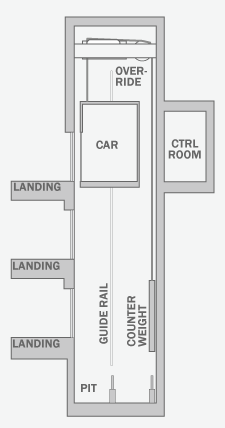
Machine-Room-Less Elevators are traction elevators that do not have a dedicated machine room above the elevator shaft. The machine sits in the override space and is accessed from the top of the elevator cab when maintenance or repairs are required. The control boxes are located in a control room that is adjacent to the elevator shaft on the highest landing and within around 150 feet of the machine.
Machine-room-less elevators have a maximum travel distance of up to 250 feet and can travel at speeds up to 500 feet-per-minute. MRL elevators are comparable to geared traction elevators in terms of initial and maintenance costs, but they have relatively low energy consumption compared to geared elevators.
Machine-room-less elevators are becoming the most popular choice for mid-rise buildings where the travel distance is up to 250 feet. They are energy efficient, require less space, and their operation and reliability are on par with gear-less traction elevators.
The main reason that MRL elevators have been adopted so slowly in the United States is because the building codes had provisions that didn't allow the motor to be within the hoistway. This is changing, but it is worth consulting with the local codes before specifying an MRL elevator.
A passenger elevator is any elevator intended for the transport of people through a building. These elevators can vary drastically in terms of size, speed and interior options depending on the use of the elevator.
A service elevator is found in many commercial buildings and is intended for the transport of goods through the buildings by employees, such as the housekeeping staff moving cleaning carts through a hotel. Service elevators are also used in hospitals for the transport of patients on hospital beds. To comply with code requirements, these elevators are typically more robust and deeper than standard passenger elevators, so they can navigate larger items through the building.
A freight elevator is intended to move very heavy loads, such as cars or cargo in industrial buildings. These elevators are not intended for passenger transport and are designed to withstand tougher working conditions, which is why their interiors are focused on robust design, with heavy steel walls and floors, rather than more attractive interiors.
A dumbwaiter is a small freight elevator. It is often used for the transport of food in restaurants. However, they can be found in both commercial, public and private buildings.
Hospital elevators are tailored for use in medical facilities. They are designed to accommodate stretchers, beds, medical equipment, and large groups The design of hospital elevators varies depending on their purpose and use. For instance, a hospital elevator may be used to transport patients from their .of Hospital bed elevators generally transport patients who are not well enough to sit up even in a wheelchair. One of the features of bed elevator
A residential elevator is one of the best types of elevators and you can customize the shape and size of the elevator. we are able to Many residential elevators feature unique designs that allow them to be more aesthetically pleasing and fit with the surrounding architecture. Some of these
These are special kinds of passenger elevators. The only difference is residential elevators are for private home elevators that are smaller and has less.
When installing a traditional home elevator, a builder has to create a shallow pit in the foundation of the home to accommodate the elevator. This pit must be created according to specific dimensions outlined in the building plans. The home elevator pit is usually 8 to 14 inches deep, not including the thickness of the concrete slab at the bottom. on the other hand, do not require a pit to be dug or poured. In homes where digging into the foundation to create a pit is not an option, pitless home elevators provide a safe and reliable alternative. Getting the comforts of an in-home elevator without disturbing the existing floor is possible with a pitless elevator.
Types of Shaftless Elevators Multiple Max Speed Per Minute 20 ft Used For Homes
These are the best elevators for homes and residences because they save space and keep your budget low. Shaftless elevators are very space-efficient because they do not require an elevator shaft. You can easily fit them into your existing home.
Perhaps the most popular type of shaft-less elevator is a “through-the-floor.” As the name implies, these types of elevators can be installed by cutting a part of your floor and retrofitting the mechanism.
A vacuum lift, also known as a pneumatic vacuum elevator, uses air pressure to move a cabin up and down. They are compact, energy efficient, and require low maintenance.
